Overview
Here’s a smoother, more readable version that keeps your conversational style while improving clarity, grammar, and flow.
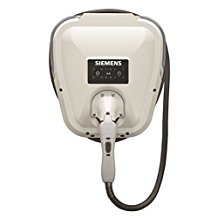
Installing an EV charger is a relatively straightforward project. The first step is choosing the best location to mount the charger. Installing it indoors is ideal because the unit is protected from the weather and is less accessible to thieves or unauthorized users. However, an outdoor installation is sometimes the only practical option. While many chargers are designed to be weatherproof, I still recommend installing some form of shelter to help protect the unit from the elements and extend its lifespan.
The Receptacle
Most EV chargers plug into either a 30-amp or 50-amp receptacle, which is connected to a matching circuit breaker. One important detail that is often overlooked is that both receptacles and breakers are available in either standard-duty or heavy-duty versions. For example, a welder may only operate for a few minutes at a time, so the electrical components experience a relatively low duty cycle. An EV charger, on the other hand, can draw a continuous load for six to eight hours while charging your vehicle. Choosing components that are designed for continuous use is essential for long-term reliability and safety.
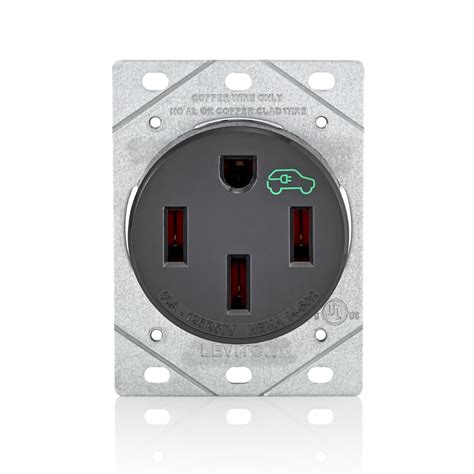
As of August 2026, I don’t see a requirement for a heavy-duty breaker, but I do see a requirement for an EV-rated receptacle. Using the correct receptacle is an important part of a safe installation.
The Math
Before any installation begins, a load calculation should be completed for your home. This confirms that your electrical service has both the available capacity and the physical space needed to safely accommodate the new circuit.
The Canadian Electrical Code requires a permit for this type of installation, and the wiring and equipment must be properly sized and installed by a qualified individual. This is not a do-it-yourself project. Saving a few dollars simply isn’t worth the risk of electrical failure or a house fire.
The cost of installing an EV charger depends primarily on two factors: the distance from the electrical panel to the charger location, which affects labour, and the current cost of materials. We’d be happy to provide a free estimate and answer any questions you have. Give us a call at 250-466-0806.