Wind generators (more formally called wind turbines) come in several designs, each suited to different environments and power needs. The main distinction is the orientation of the rotor.
- Horizontal-Axis Wind Turbines (HAWTs)
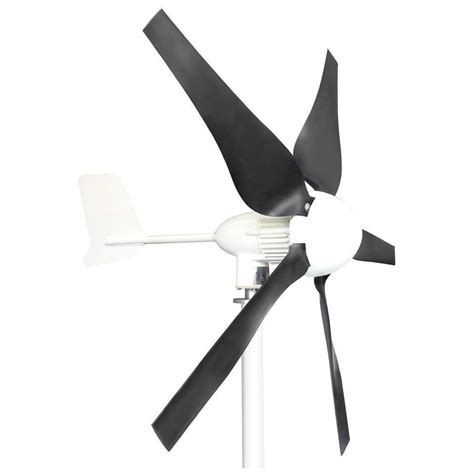
These are the familiar three-bladed turbines seen in wind farms.
How they work:
The rotor spins around a horizontal shaft.
The turbine faces into the wind, often using a yaw system that rotates the nacelle.
Advantages:
Highest efficiency of all wind turbine designs.
Mature, proven technology.
Well suited for large-scale electricity generation.
Disadvantages:
Requires a tall tower.
More complex installation and maintenance.
Performance drops in turbulent wind.
Typical applications:
Utility-scale wind farms
Farms and ranches
Large commercial installations
Residential systems in open, windy areas
- Vertical-Axis Wind Turbines (VAWTs)
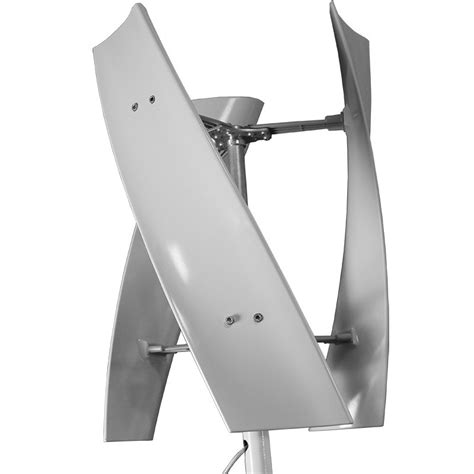
These have a vertical shaft, allowing them to accept wind from any direction.
They come in several designs.
Darrieus (“Eggbeater”) Turbine
Curved blades form a shape similar to an eggbeater.
Pros
Good efficiency for a VAWT.
Doesn’t need to turn toward the wind.
Generator can be located near the ground.
Cons
Usually cannot self-start.
Higher mechanical stresses.
More difficult to manufacture.
Best for
Research
Small commercial applications
Areas with changing wind direction
H-Rotor (Straight-Bladed Darrieus)
Uses straight vertical blades instead of curved ones.
Pros
Easier to build.
Better structural strength.
Lower manufacturing cost.
Cons
Similar self-starting challenges.
Lower efficiency than modern HAWTs.
Best for
Experimental systems
Urban installations
Savonius Turbine
Uses two or more scoop-shaped blades, similar to halves of a barrel.
Pros
Starts easily even in light winds.
Very simple construction.
Quiet operation.
High torque at low speed.
Cons
Lowest efficiency.
Not suitable for generating large amounts of power.
Best for
Battery charging
Ventilation
Educational projects
Remote sensors
- Offshore Wind Turbines
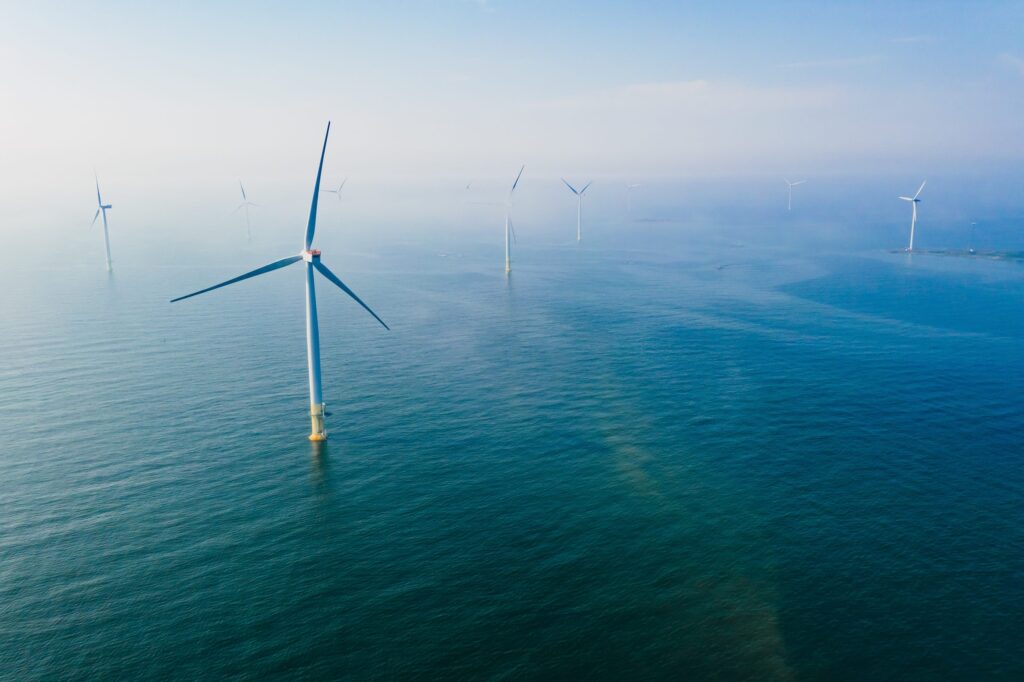
These are generally horizontal-axis turbines installed in bodies of water.
They can be:
Fixed-bottom, attached to the seabed in relatively shallow water.
Floating, mounted on floating platforms anchored to the seabed for deeper water.
Advantages
Stronger, more consistent winds.
Very large power output.
Less visual and noise impact on populated areas.
Disadvantages
High installation cost.
Challenging maintenance.
Requires specialized infrastructure.
- Small Wind Turbines (Micro Wind)
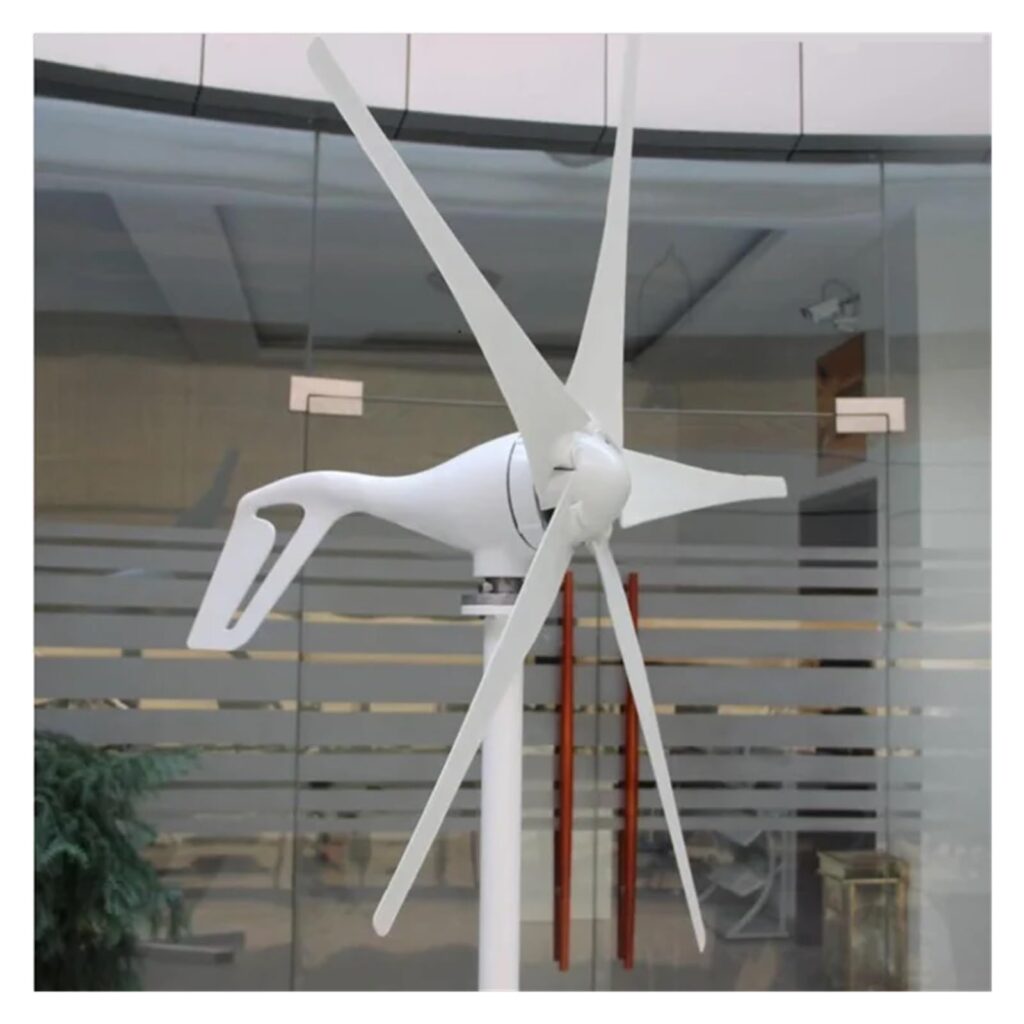
These are designed for homes, cabins, boats, or remote locations.
Power range:
About 100 W to 100 kW
They may be horizontal- or vertical-axis.
Uses
Off-grid cabins
RVs
Sailboats
Telecommunications equipment
Supplemental home power
- Utility-Scale Wind Turbines
These are the large turbines used in commercial wind farms.
Typical characteristics:
Rotor diameter: 100–250 m
Hub height: 80–170 m
Power rating: 2–15+ MW (offshore models can be even larger)
These produce electricity for the grid rather than individual buildings.
Specialized designs
Engineers have also developed less common concepts, including:
Multi-rotor turbines – Several smaller rotors mounted on one structure instead of a single very large rotor.
Diffuser-augmented turbines – A shroud or duct increases airflow through the rotor to boost output.
Airborne wind energy systems – Kites or tethered drones capture stronger winds at higher altitudes; these remain largely experimental.
Helical-blade VAWTs – Twisted vertical blades reduce vibration and provide smoother rotation.
Comparison
Type Efficiency Starts Easily Wind Direction Common Use
Horizontal-axis ★★★★★ Yes Must face wind Wind farms, homes
Darrieus VAWT ★★★★☆ Usually no Any direction Small commercial
H-Rotor VAWT ★★★☆☆ Sometimes Any direction Urban, experimental
Savonius VAWT ★★☆☆☆ Excellent Any direction Low-power devices
Offshore HAWT ★★★★★ Yes Uses yaw system Large-scale electricity
For most electricity generation, horizontal-axis wind turbines dominate because they extract energy from the wind more efficiently. Vertical-axis turbines are attractive where winds are turbulent or frequently change direction, such as in urban environments, but they generally produce less electricity for a given swept area. The best choice depends on factors such as average wind speed, available space, maintenance access, and the amount of power required.