Solar Panels
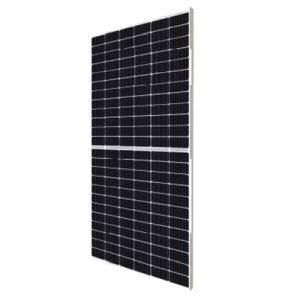
There are many companies offering panels these days and the technology is changing quickly. Before agreeing to purchase please do due diligence in making an informed decision.
Ask questions like:
- How much sunlight does my location actually receive?
- How much energy do I actually need?
- Do I need a grid tie system (where you sell surplus electricity back to your utility company)(is this even a choice that you have) or do I want a stand alone system where I will store my own surplus energy?
- What permits and regulations affect my location?
- What is the lifespan of the equipment that I am being offered?
There are many many things to take into consideration to design a successful and profitable installation. We work with folks who can help provide some of those answers but at the end of the day it is your hard earned money and your decision as to how it all turns out.
If you have questions please feel free to drop us a note and we will do our best to get you going in the right direction.
Solar Charge Controllers
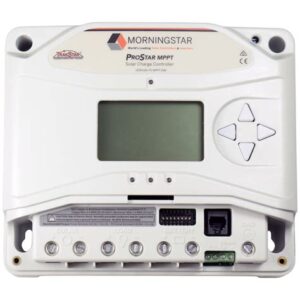
Over the years there have been several types of charge controllers manufactured.
For almost all battery-based solar systems, there are two main types of solar charge controllers on the market:
- PWM (Pulse Width Modulation)
- MPPT (Maximum Power Point Tracking)
Older technologies such as shunt and series controllers still exist in specialized or legacy equipment, but for modern RVs, cabins, boats, and off-grid systems, PWM and MPPT dominate the market.
| Feature | PWM | MPPT |
|---|
| Cost | Low | Higher |
| Efficiency | 70–85% typical | 95–99% typical conversion efficiency |
| Best for | Small systems | Medium to large systems |
| Panel Voltage | Must closely match battery voltage | Can use much higher panel voltages |
| Installation | Simple | More complex |
| Battery Charging | Good | Excellent |
My personal favorite is MPPT due to it’s greater efficiency and the higher voltages. The higher cost is offset by the system generating more power, in my humble opinion.
1. PWM (Pulse Width Modulation)
How it works
A PWM controller essentially connects the solar panel directly to the battery in rapid pulses. The panel voltage is pulled down close to the battery voltage, meaning any excess panel voltage is not converted into additional charging power.
Advantages
- Lowest purchase price
- Very reliable with fewer electronic components
- Easy to install
- Excellent for small 12V systems
- Low standby power consumption
Disadvantages
- Lower efficiency
- Cannot convert excess voltage into additional charging current
- Requires panel voltage to closely match battery voltage
- Less effective in cold weather
- Not ideal for larger solar arrays
Best Uses
- Small cabins
- Garden sheds
- Security systems
- Small boats
- Single-panel RV systems
- Budget installations
2. MPPT (Maximum Power Point Tracking)
How it works
An MPPT controller constantly searches for the solar panel’s “maximum power point” and electronically converts excess voltage into additional charging current.
For example:
- Solar panel = 36V @ 10A = 360W
- Battery = 12V
A PWM controller wastes much of the voltage difference.
An MPPT controller converts that higher voltage into more current:
36V × 10A ≈ 12V × 30A (minus small conversion losses)
This allows the battery to receive much more usable energy.
Advantages
- Highest efficiency
- Often harvests 15–30% more energy than PWM, depending on conditions
- Works with high-voltage solar arrays
- Longer cable runs with smaller wire sizes
- Better performance in cold weather
- Better charging for lithium batteries
- Ideal for expanding systems
Disadvantages
- Higher cost
- More complex electronics
- Slightly larger size
- May require more configuration
Best Uses
- Homes
- Off-grid cabins
- RVs with multiple panels
- Boats
- Lithium battery systems
- Solar arrays over about 200 watts
Older Controller Types
Shunt Controllers
These were common decades ago.
Pros
- Very simple
- Extremely inexpensive
Cons
- Inefficient
- Wastes excess power as heat
- Rarely used today
Series Controllers
These disconnect the panel when the battery is fully charged instead of shorting excess power.
Pros
- Better than shunt controllers
- Reliable
Cons
- Mostly replaced by PWM and MPPT technology
Which Controller Should You Buy?
| System Size | Recommended |
|---|---|
| Under 100W | PWM |
| 100–200W | PWM or MPPT |
| Over 200W | MPPT |
| 24V or 48V battery bank | MPPT |
| Lithium batteries | MPPT |
| Long cable runs | MPPT |
| Cold climates | MPPT |
| Tight budget | PWM |
Cost Comparison
| Controller | Typical Price (USD) |
|---|---|
| Basic PWM 10A | $15–30 |
| PWM 30A | $30–80 |
| MPPT 20A | $80–180 |
| MPPT 40A | $150–350 |
| Premium MPPT (Victron, Morningstar, OutBack) | $300–900+ |
Recommendation by Application
- Small 100W solar kit for a shed or gate opener: PWM is usually sufficient.
- RV or camper with 200–800W of panels: MPPT is well worth the extra cost.
- Off-grid cabin: MPPT is the standard choice because of higher energy harvest and flexibility.
- Home battery backup or lithium battery bank: MPPT is the preferred option for efficiency and charging performance.